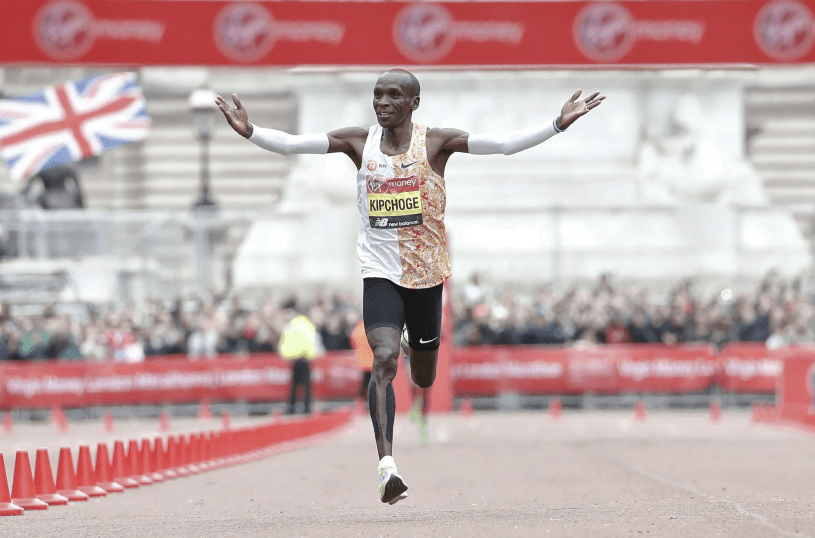
On Sunday I went to get an education. A running education, from Shane Benzie, author of The Lost Art of Running. A friend lent me the book a few weeks ago. I found it fascinating. It’s based on many years of research into what makes great runners great. What are the common factors? Why and how do they make it look so graceful and effortless? Most importantly, how can mere mortals like me get some of that goodness into our running form?
Handily, Shane lives 15 minutes away in Goring on Thames. He runs a group workshop there once a month, an all day gig with a maximum capacity of 10. I was lucky as it turned out there were only 3 of us this time, which made for quite a lot of contact time with the main man.
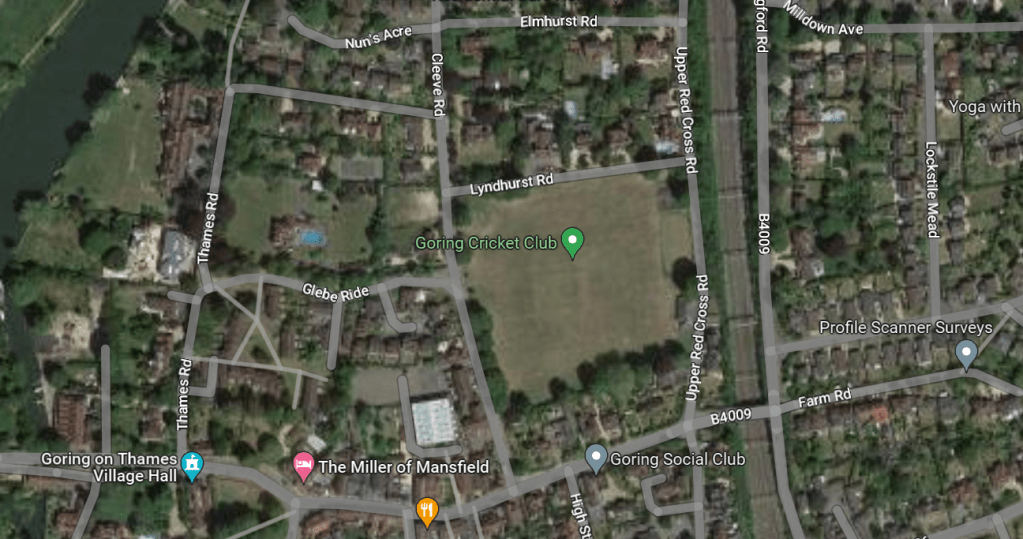
We first spent a while in the club house. Shane introduced his research and the types of work he does and with whom, establishing his bona fides, then off we went outside into the sunshine.
He had us do a couple of laps round the cricket field while he watched us, having instructed us to “just run normally”, without trying to impress him, without any bells and whistles. He wanted to see our default, our factory settings. Suitably warmed up, we than ran up and down a line on the grass, with Shane videoing us.
On watching that back, it was clear two of us had pronounced heel strikes, and one the opposite, a forefoot striker. Benzie is a proponent of a foot landing which makes use of the shape of the foot, particularly the arch, to get the most return from the impact of 2.5 times our body weight hitting the ground. He recommends a “tripod” landing, a triangle formed of the ball of your foot, the equivalent “little ball” by your little toe, and the heel. With that advice, coupled with some specific guidance about how and where to push off from the ground, off we went out into the field again. A couple of practice laps, focusing hard on these elements, then videoed again and back inside to see if any of it stuck. I was pretty amazed to see that it had. My pronounced heel strike was gone, and with it the braking effect and instability it causes, replaced with a perfect landing and a good push off.
Arm drive was the next focus. Somewhat counter intuitively, that drive is not forward, but backwards, with the focus on driving the elbow back whilst keeping the arms tucked in and high enough that our wrists brushed just above hip level. Having read the book, I thought I was already doing this, but no, or certainly not enough. The correct amount felt like hard work, and very exaggerated. It should feel uncomfortable, he said, because we’re not used to working those muscles and ligaments in that way.
Next we worked on connecting rear arm drive to our opposing legs. Man that was a disaster zone! It sounded simple, get your elbow moving in time with your opposing ankle. So when your elbow is at its farthest backwards so should your opposite ankle. I’ve never had to think about moving arms and legs together, that just sort of happens when you run, doesn’t it? Right? Well, no, apparently not, or not for me anyway. I could not get it together. I literally forgot how to run at one point, messages weren’t getting through from my brain to my limbs while I tried to think too hard. When asked afterwards how it felt, I could only reply “mal-coordinated”. It felt like I had the upper body of one runner and the legs of another, stitched together for the afternoon. Like a baby giraffe on ice. Mad! I just couldn’t do it. Shane gave me a couple of drills to practice, but assured me I just need to stick with it and it will eventually click. Making that mental and physical connection is important because it results in an efficient movement, arms and legs working in concert. We shall see.
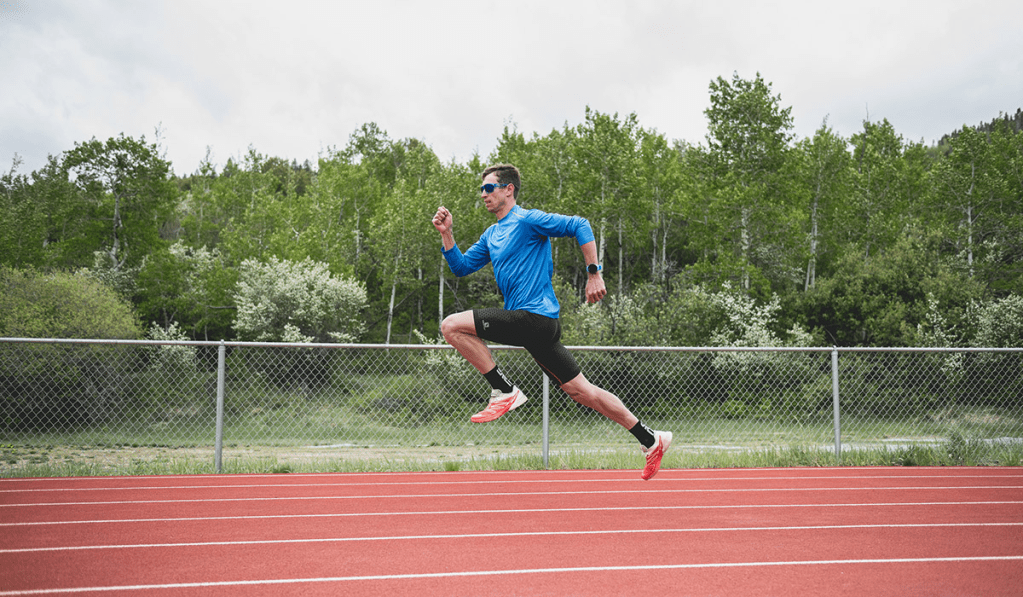
He then started to unravel something else I thought I knew for certain fact. To run fast, you have to run harder, right? Faster legs, higher cadence, more movement, arms and legs going like the clappers, that’s how you go quick, no? No. Or yes, but that’s inefficient and uses stores of energy, mainly muscles, that are quickly depleted. His premise is that to go faster you do more of what you do running slow. More push off means more time in the air, means longer strides, means more distance for similar effort, equals speed. More. More bounce, more height, more air, head taller, chest more forward, more (backwards) arm drive. Based on a couple of laps of the field, it works. With little additional effort, I did indeed speed up. I’m not sure by how much, and it will be interesting to see how this works when I do my next speedwork session.
I have some serious practice to do, but I was greatly encouraged by how much progress was made in just a few hours. The best way to get really good at something is to do it a lot. Handily, I have a lot of running in my immediate future, so I’ll have plenty of opportunity.
I recommend both the book and the workshop I attended. I may well go back for a 1:1 session in a couple of months, see how well I’ve managed to ingrain the movement patterns.
There is a graceful, efficient runner in me somewhere and I intend to find him.
I’ll be back soon with an update on February’s training as I get ready for a busy racing year.
 unwilling veteran